Ogden Museum of Southern Art
925 Camp St
New Orleans, LA 70130
504.539.9600 | HOURS

925 Camp St
New Orleans, LA 70130
504.539.9600 | HOURS
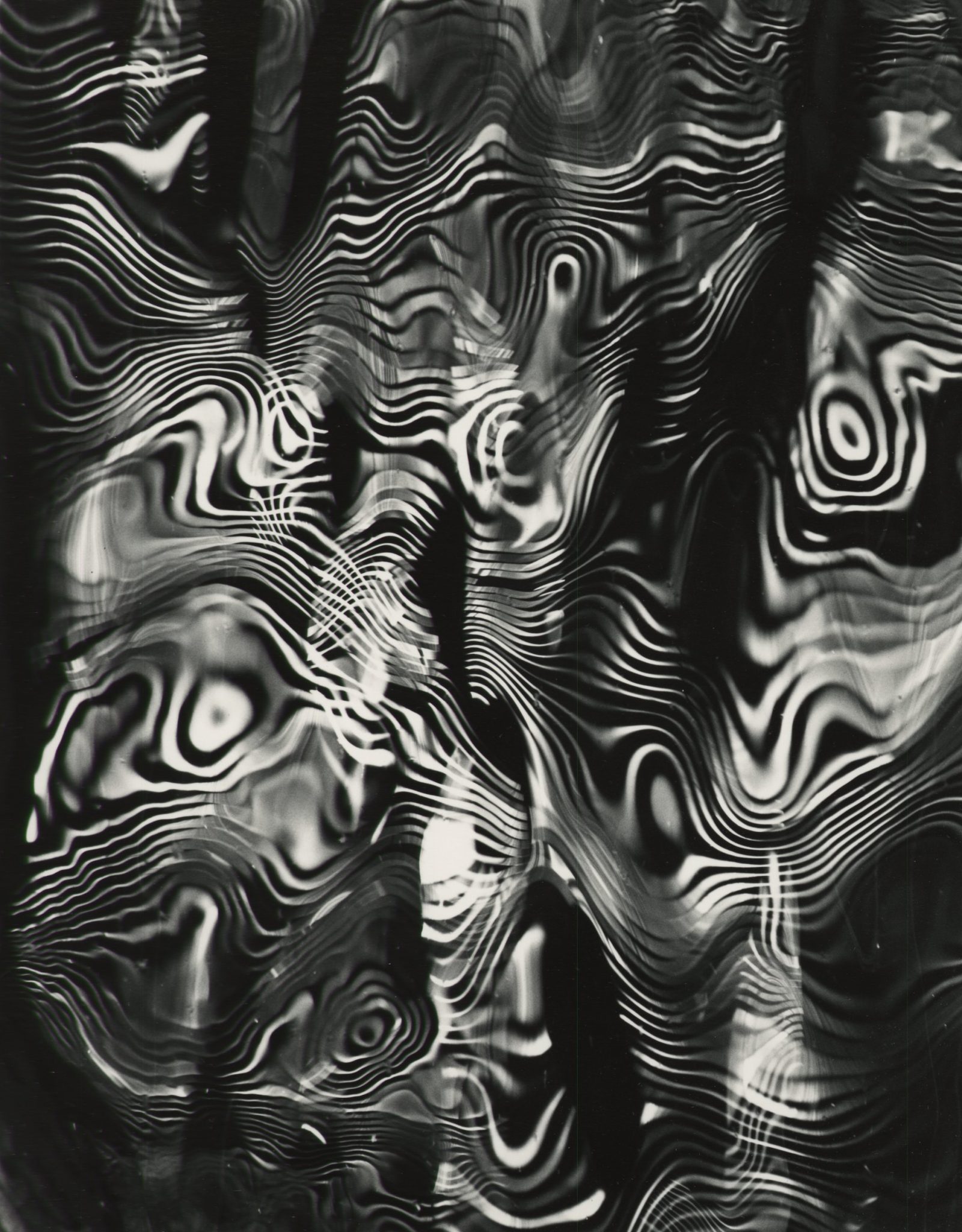
Tom McNease, Indeterminate in Chaotic Element of Rectilinear Determinability, 1976, Gelatin silver print, 10 x 8 inches, Gift of Jan Katz, 2022.7.60
I did the “usual” things one does in art—the shows, collections—all over the country, and particularly with photography. But that road can quickly lead to a “loss of meaning” if one is not careful—becomes “about the artist” rather than “about the art.” So, I left that scene to develop my art, self and particularly pursue a long-held idea of mine—to see and view the world in the eyes and mind of the feral child. – Tom McNease
Tom McNease is a true enigma of Southern Art. Known as an eccentric recluse, McNease avoided the social trappings of the art world choosing instead to live an isolated existence among the swamps, bayous and rivers of Southeast Louisiana. The full depth and importance of McNease’s art practice was not known until after his death in 2014.
Tom McNease was born in Meridian, Mississippi. He studied Zoology at Southeastern Louisiana University in the late 1960s and briefly worked as a science teacher within the public school system. In 1970, McNease became fascinated with photography and taught himself camera operation and darkroom printing. His early photographic influences included Minor White, Wynn Bullock and Clarence John Laughlin. Later, he would introduce painting into his studio practice.
By 1975, McNease was earning recognition for his photography with exhibitions in Dallas, Santa Fe and New York City. That same year his photographs were published in the Swiss Magazine, “Camera.” In 1979, McNease began to retreat from the local and national art community to a studio cabin he built in the Louisiana marshlands. It was at a series of cabins in the swamps and bayous outside of New Orleans that McNease would continue to live and make art for over 30 years.
McNease’s art was directly inspired by nature and his surroundings in the marshlands of Louisiana and Mississippi. Nature and the natural world were depicted in his photographs and paintings through the lens of abstraction. He used abstraction as a way to deconstruct the natural world into an intuitive form of artistic expression, void of the formal constraints found in figurative painting and photography.
Abstraction within photography is sometimes considered paradoxical, for a process that is almost exclusively applied for the exact reproduction of reality or the real world. For McNease, working outside of society and outside influences, abstraction was the vehicle most capable of capturing the flowing rhythms of the natural world in which he inhabited. Surrounded by nature, the subjectivity within abstraction seemed most aligned to the state of consciousness within the artist’s mind. The heightened awareness to the cycles of life from molecular structure to the flora and fauna of the forests and marshes resonates within the abstraction of his art.
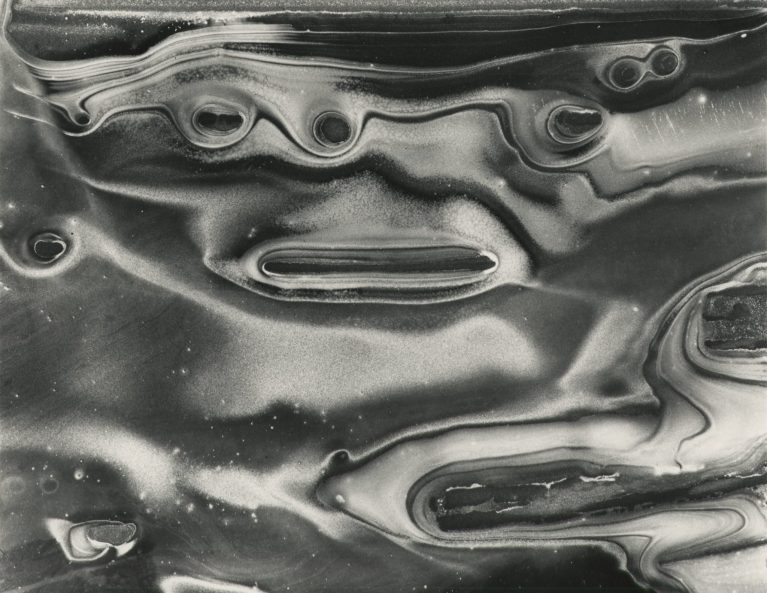
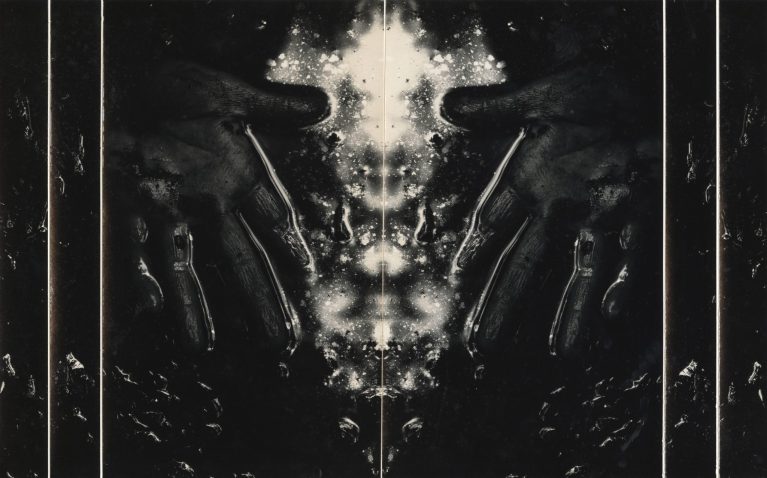
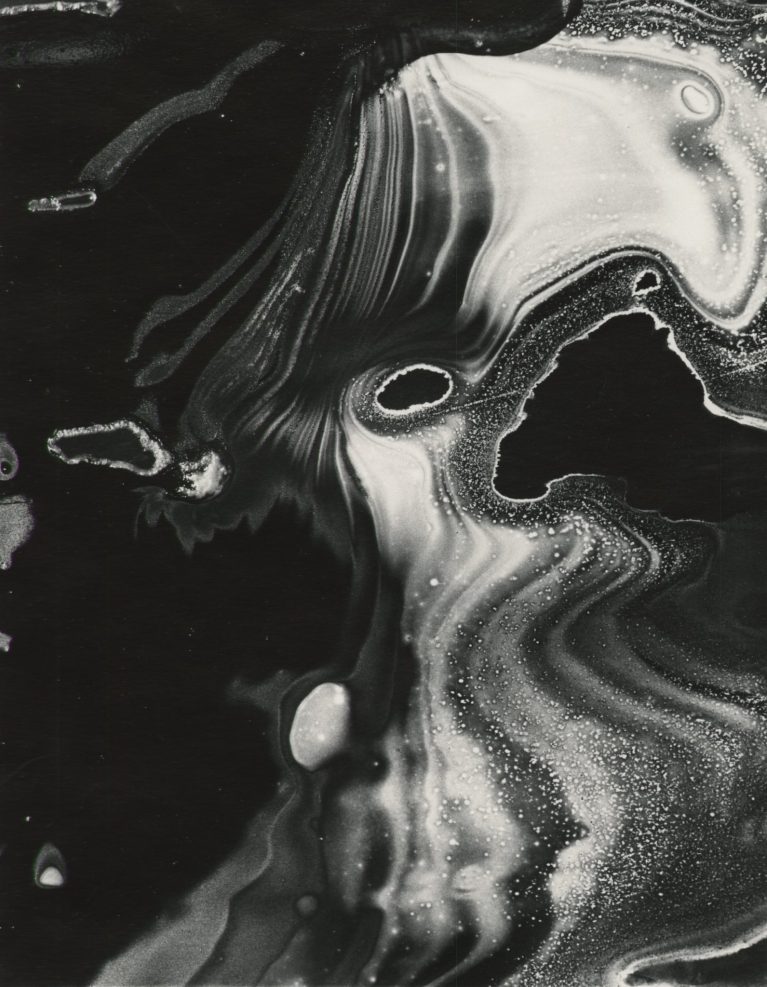
McNease’s photographs can be divided into three distinct categories of abstraction: lens-formed, chemigrams and photo-collages. The lens-formed abstractions are usually high contrast close-up photographs of water. These photos capture amorphic shapes, patterns in nature created when light bounces off water. Chemigrams are camera-less images made in the darkroom by applying photo-chemistry onto light sensitive paper. When exposed to light, amoeba-like shapes of grey and black form against a background of white paper. Photo-collages involve meticulously cutting photographic prints into smaller sections or strips then collaging the many sections back together to form a larger unique print predicated on chance.
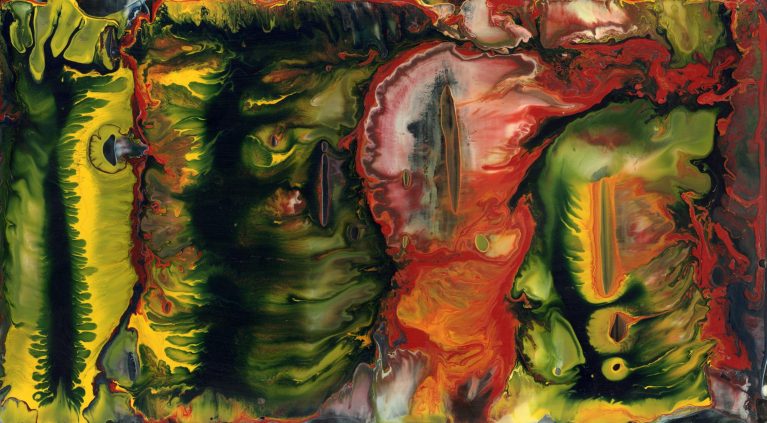
In 1983, McNease began to focus less on photography, and instead turned his attention towards painting. This seems like a logical progression for a photographer who worked almost exclusively in abstraction and probably had exhausted his exploration of abstraction within the photographic process. From 1983 onward, McNease created thousands of paintings. Just as he had done with photography, experimentation and pushing the boundaries of material and technique defined the artist’s painting practice. McNease painted on glass, wood and paper – glass seemed to be his favorite. He painted on top of glass, made reverse glass paintings and used the smooth glass surface to produce his signature paint “skins.” McNease’s paint skins were made by peeling dried acrylic paint off glass, then reassembling the skins onto another surface to create a collage.
In another body of work, McNease took 2-dimensional paintings into the realms of 3-dimensional sculptures by creating large sheets of paint skins that would then be folded and hung from the ceiling. These 3-dimensional works, which McNease referred to as “mobiles” have been compared to the draped paintings by Sam Gilliam.
Overall, In the Eyes and Mind of the Feral Child: The Art of Tom McNease shines a light on this misunderstood and underappreciated artist whose contribution and innovative use of photography and painting has been overlooked due in part by his refusal to participate in the commercial art gallery and museum system.
Host Committee
Kaye Courington
Supporting Sponsor
Catherine Makk
Ogden Museum of Southern Art is dedicated to presenting and preserving the art of the American South. Exhibitions like this are made possible through the generosity of supporters.
support